After twenty-five years of repairing dysplastic hips, I have developed a strong opinion: the most effective surgery is the one that never needs to happen. Every generation of German Shepherds born with better hips than the last means fewer dogs on my operating table. That progress depends entirely on how breeders select their breeding stock, and the tools available for making those decisions have improved dramatically in the past decade.
The frustrating reality is that hip dysplasia genetics are genuinely complex. This is not a single-gene disorder where you test, identify carriers, and eliminate the allele. Dozens of genes contribute small effects that interact with each other and with the environment. But complexity does not mean we are powerless. It means we need more sophisticated approaches than simply X-raying parents and hoping for the best.
The Limits of Phenotypic Selection
Traditional breeding selection relies on phenotype: the observable hip quality of the individual dog, typically assessed through OFA radiographs or PennHIP evaluation. This approach has improved breed averages over fifty years of screening, but progress has been frustratingly slow. German Shepherd dysplasia prevalence on OFA evaluation has declined from roughly 30% in the 1970s to around 20% today. Fifty years of effort for a ten-percentage-point reduction.
Why the slow pace? Phenotypic selection suffers from a fundamental limitation: a dog's hip score reflects both genetics and environment. A dog with moderate genetic risk raised under optimal conditions, lean growth rate, appropriate exercise, good nutrition, may present with excellent hips. That dog passes screening, enters the breeding population, and transmits risk alleles that phenotypic assessment could not detect. Conversely, a genetically superior dog raised on slippery floors with ad-lib feeding might show subclinical changes and be removed from breeding unfairly.
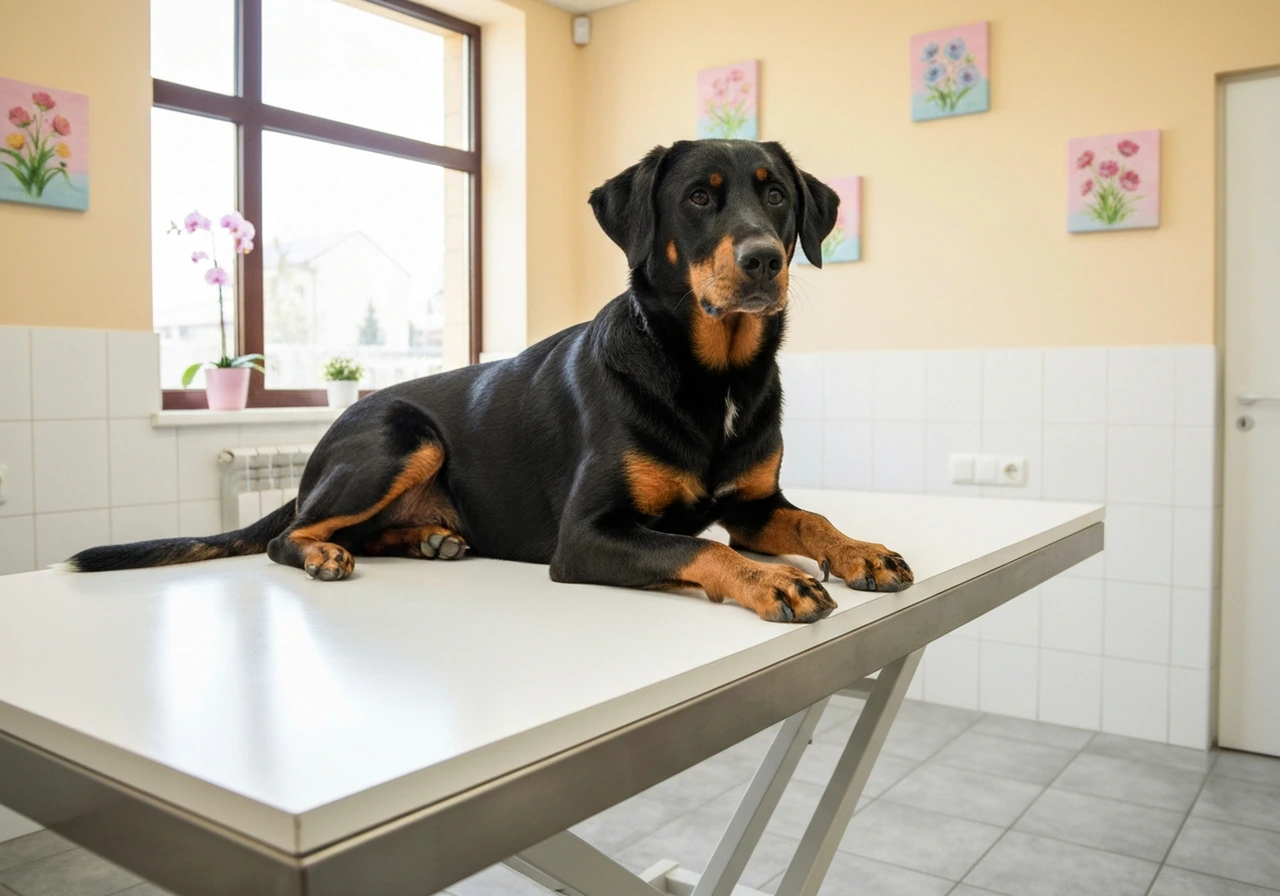
The voluntary nature of OFA submission compounds the problem. Breeders submit dogs they expect to pass and quietly retire those they expect to fail. The OFA database therefore presents an artificially optimistic picture of breed health. The true prevalence of dysplasia is higher than published numbers suggest because affected dogs are systematically excluded from the data.
The buyer-side version of this problem starts even earlier, in the advertisement. Our article on health data coming before appearance examines how colour labels and documented scores compete for a buyer's attention.
Estimated Breeding Values: Thinking Beyond the Individual
Estimated breeding values (EBVs) represent a fundamental advance in selection methodology. Rather than evaluating a dog solely on their own hip score, EBVs incorporate information from relatives: parents, siblings, half-siblings, and offspring. The resulting value estimates the dog's genetic merit for hip quality more accurately than individual phenotype alone.
The logic is straightforward. A dog with OFA Good hips whose siblings all scored Excellent and whose offspring consistently produce Good-to-Excellent hips has a different genetic value than an OFA Good dog whose siblings include three with Mild dysplasia and whose offspring are variable. The individual score is identical, but the family data reveals different underlying genetics.
The British Veterinary Association and the Kennel Club in the UK have provided hip score EBVs since 2012. The Finnish Kennel Club, the Swedish Kennel Club, and several other European registries offer similar tools. In each case, the EBV expresses a dog's genetic merit relative to the breed average. Breeding with dogs whose EBVs are better than breed average, sustained over generations, produces measurable population improvement.
The United States lags behind Europe in EBV implementation for hip dysplasia. OFA provides individual scores and some family data but does not calculate formal EBVs. This gap means American breeders must either calculate informal breeding values from pedigree data themselves or rely on individual phenotype alone. The tools exist; the infrastructure for broad implementation does not yet.
Genomic Testing: The Emerging Frontier
Genomic estimated breeding values (GEBVs) add DNA marker information to the traditional EBV calculation. By genotyping dogs across thousands of genetic markers, researchers can identify chromosomal regions associated with hip quality and weight that information into breeding value predictions.
Several companies now offer genetic panels relevant to hip dysplasia risk. These tests identify known associated markers and produce risk scores. The technology is real but the interpretation requires caution. Current panels explain only a fraction of total genetic variance for hip dysplasia, perhaps 15-30% depending on the platform and breed. A low-risk result does not guarantee good hips, and a high-risk result does not condemn a dog to dysplasia.
I recommend treating genomic test results as one data source among several rather than a standalone selection tool. A breeding decision informed by individual hip scores, PennHIP distraction indices, family history, EBV where available, and genomic risk profile is substantially better than one based on any single metric. The power lies in combining multiple imperfect predictors into a more reliable composite assessment.
The pace of genomic discovery is accelerating. Whole-genome sequencing costs have dropped from thousands of dollars per dog to hundreds, making large-scale research feasible. Studies involving thousands of dogs across multiple breeds are identifying new associated regions regularly. Within the next five to ten years, genomic prediction accuracy for hip dysplasia will likely improve substantially, making these tools increasingly valuable for breeders.
Practical Breeding Strategies That Work
Given the current state of available tools, what should a conscientious Shepherd breeder actually do? These are the strategies I recommend based on decades of working with breeding programs that achieve consistently good results:
Screen every dog with both OFA and PennHIP. OFA provides the categorical assessment recognized by most breed clubs. PennHIP provides the continuous distraction index that identifies laxity more sensitively. Dogs with tight PennHIP scores (DI below 0.30) and OFA Good or Excellent ratings represent the safest breeding candidates from a hip perspective.
Evaluate the entire family, not just the breeding pair. Request and review hip scores for siblings, parents' siblings, and previous offspring from the same sire and dam. A sire who has produced 50 puppies with 95% normal hips provides more reliable prediction than an untested young dog with personal Excellent scores. Depth of family data trumps individual brilliance.
Submit all screening results publicly. The practice of only submitting passing scores distorts the database and prevents other breeders from making informed decisions. Programs that publish every result, passes and failures alike, contribute to breed improvement and earn justified trust from puppy buyers. OFA now allows "open" submission where all results become public, and I strongly encourage breeders to use this option.
Track offspring outcomes systematically. Establish a follow-up protocol with puppy buyers that includes hip screening at 24 months. Offer incentives: subsidize the cost of screening for puppy buyers who submit results back to you. The data from your own breeding program is more valuable than population-level statistics because it reflects your specific genetic lines.
Avoid popular sire syndrome. When a single male with outstanding hips is bred extensively, his genes saturate the population. If he carries hidden risk alleles for other conditions, or even moderate hip risk masked by optimal phenotype, the damage is widespread and irreversible. Limit the number of litters per sire and use a variety of breeding males to maintain genetic diversity. For a thorough discussion of how elbow and hip screening programs intersect in breeding decisions, Elbow Score Database's overview provides useful context on managing multiple orthopedic screening requirements simultaneously.
The Role of Environmental Guidance
Even the best genetic selection cannot eliminate hip dysplasia if puppyhood environment works against favorable development. Responsible breeders do not stop at genetic selection; they also guide puppy buyers toward environments that optimize hip development.
Growth rate management: Provide specific feeding guidelines for puppy buyers. Recommend large-breed puppy formulations with controlled calcium and moderate caloric density. Explicitly warn against ad-lib feeding, which accelerates growth and increases dysplasia expression even in genetically favorable dogs. The principles outlined in our weight management guide apply from puppyhood through adulthood.
Exercise during development: Puppies should not engage in repetitive high-impact activities before skeletal maturity. No forced running, no extended ball chasing, no jumping from heights. Free play on varied terrain is beneficial; structured high-impact exercise before twelve to eighteen months is not. Include these recommendations in your puppy buyer contracts.
Surface and housing: Slippery flooring during the critical growth period forces abnormal gait patterns that stress developing joints. Advise buyers to provide textured surfaces, area rugs on hard floors, and outdoor access to natural terrain. These simple environmental modifications support normal hip development.
Measuring Progress Across Generations
Breeding improvement is measured in generations, not individual litters. A program producing 5% fewer dysplastic offspring per generation accumulates substantial improvement over five to ten generations. The key is consistent selection pressure maintained over years, not dramatic single-generation changes that sacrifice genetic diversity.
Maintain detailed breeding records. Document every screening result, every offspring outcome, every health report from puppy buyers. This data becomes increasingly valuable over time, allowing you to identify which combinations produce the best results and which lines carry hidden risk.
Compare your program's outcomes against breed averages. If the OFA dysplasia rate for German Shepherds is 20% and your program produces 5%, you are doing something right. If your rate matches or exceeds the breed average, your selection strategy needs revision regardless of how impressive individual parents look on paper.
Collaborate with other breeders. Sharing screening data, offspring outcomes, and breeding strategies across programs accelerates progress for everyone. The breeders achieving the best hip health outcomes are rarely working in isolation. They participate in breed health committees, contribute to research studies, and exchange information openly with peers.
The Ethical Dimension
Breeding decisions carry moral weight. Every mating that ignores available screening tools risks producing puppies who will suffer pain, require expensive treatment, and potentially face shortened lives. The tools for reducing that risk exist. Using them is not optional for anyone claiming to breed responsibly.
This does not mean culling every dog with less-than-perfect hips from the breeding population. Extreme selection pressure narrows the gene pool and creates other problems. It means making informed decisions that balance hip quality against other important traits: temperament, structure, working ability, and overall genetic diversity. A dog with OFA Fair hips but outstanding temperament, excellent elbow scores, and strong family history may contribute more to the breed than one with Excellent hips and mediocre everything else.
The goal is continuous, sustainable improvement. Each generation slightly better than the last. Each litter planned with more data than the one before. Each affected puppy supported with a health guarantee that acknowledges the breeder's responsibility. That is what reducing hip dysplasia prevalence actually looks like in practice, not perfection, but relentless incremental progress grounded in data and accountability.
For any terrier breed, ask the breeder for hip scores issued under a recognised scheme, not a verbal assurance. Those scores should come with the dog's registered name and be verifiable. Bull Terrier breeders should also show current eye examination certificates and, where the breed club requires it, heart screening. A breeder who keeps records in order and explains each result plainly is easier to trust than one who offers only praise for the dog. My breed health screening notes set out what to request and how to read the paperwork before you reserve anything.
Before you pay a deposit, ask the breeder for the registered name and number of the sire and dam, then check those dogs yourself in the club or kennel club database rather than trusting a screenshot. Show results should be verifiable through the same records, with dates, judges and placements you can match to the dog. If a breeder cannot or will not point you to those records, treat that as your answer. Reading a show calendar correctly also tells you whether the claimed wins happened at events that actually took place.