The surgery itself takes perhaps two hours. The recovery takes months. After performing hundreds of hip procedures, I have learned that surgical skill accounts for maybe half the outcome. The other half depends on what happens in the weeks following surgery. Owners who follow rehabilitation protocols meticulously see dramatically better results than those who cut corners or rush the timeline.
What follows is the general framework I use for post-operative management. Your surgeon may modify these recommendations based on the specific procedure performed, your dog's individual response, and any complications encountered. Always follow your surgeon's specific instructions when they differ from general guidelines.
Immediate Post-Operative Period: Days 1-3
Your dog will come home groggy and uncomfortable. Pain management is priority one. I send patients home with multimodal analgesia, typically an NSAID, gabapentin, and sometimes a short course of tramadol or other opioid depending on the procedure and individual response. Do not skip doses because the dog seems comfortable. Pain medication works best when maintained at consistent levels.
Strict confinement begins immediately. This means crate rest or confinement to a small area with non-slip flooring. The crate should be large enough for the dog to stand, turn around, and lie down comfortably, but not so large that they can take multiple steps. For large Shepherds, an exercise pen may be more practical than a crate.
Ice application reduces swelling and provides pain relief. Apply ice packs wrapped in a thin towel to the surgical site for fifteen to twenty minutes, three to four times daily for the first three days. Watch for excessive licking at the incision, which may require an Elizabethan collar or surgical recovery suit.
Elimination walks only. Carry or support the dog outside to a designated spot, let them do their business, and return to confinement. Use a sling or towel under the belly for support. Total walking time should not exceed five minutes, and slower is better.
What to watch for: Excessive swelling at the incision, discharge, fever, complete refusal to use the limb, or sudden decline in comfort level. These warrant immediate contact with your surgeon.
First Two Weeks: The Critical Restriction Phase
Continue strict confinement. This is the phase where surgical failures most commonly occur. Dogs start feeling better before they have healed, and any owner who thinks their recovering Shepherd will not try to run if given the opportunity has never owned a Shepherd. One moment of exuberance can destroy weeks of surgical work.
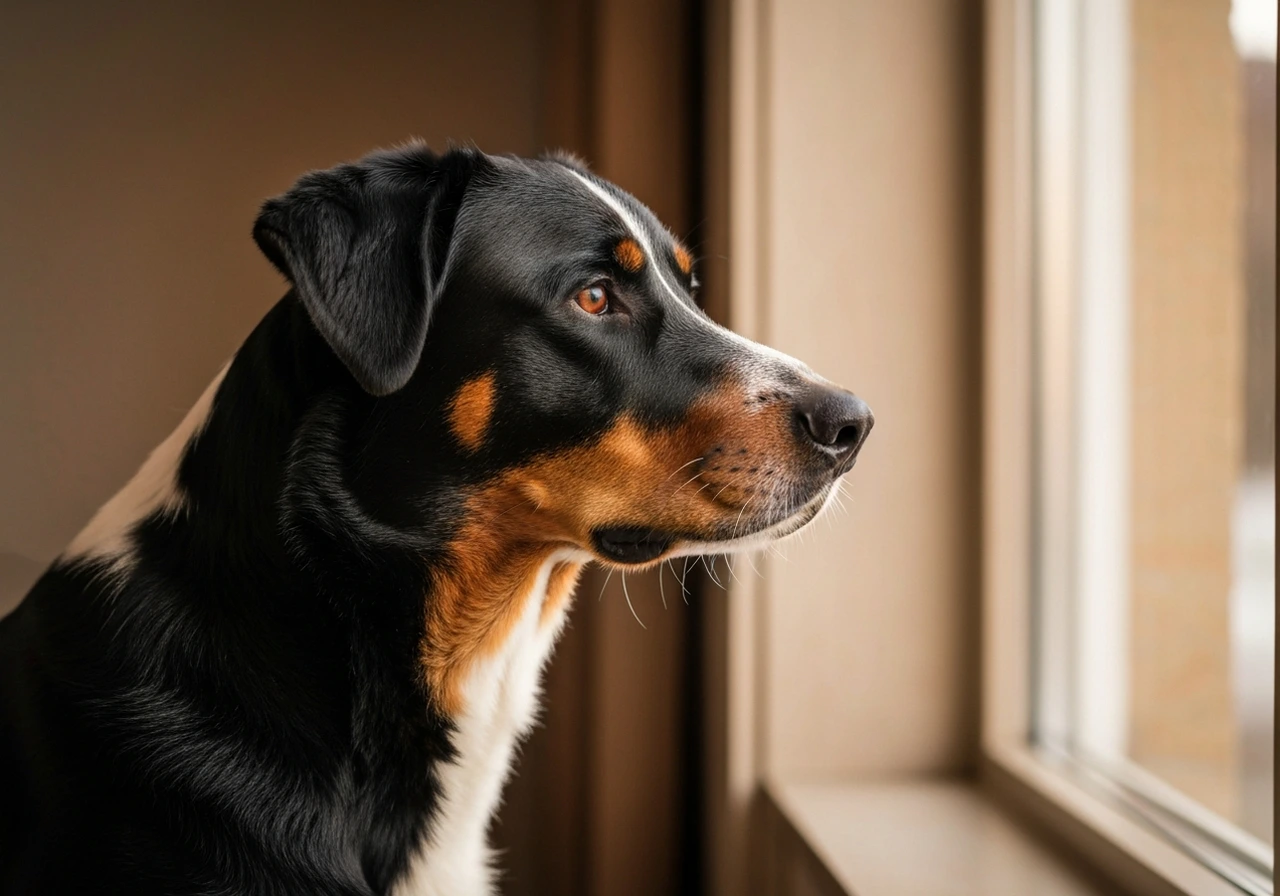
Walking protocol: Leash walks of ten minutes maximum, two to three times daily. Maintain a slow, controlled pace. No stairs, no jumping, no playing with other animals. If you have multiple dogs, keep them separated. Even friendly interaction can involve enough movement to compromise healing.
Passive range of motion exercises begin around day three to five, depending on the procedure. With the dog lying on their side, gently flex and extend the operated hip through a comfortable range. Ten repetitions, twice daily. Never force past resistance. This prevents joint stiffness and promotes healing without stressing the repair.
Suture or staple removal typically occurs between ten and fourteen days. The incision should be clean, dry, and showing good healing by this point. Some redness along the incision line is normal. Spreading redness, warmth, or discharge is not.
For total hip replacement patients, this phase is especially critical. The prosthetic components rely on surrounding soft tissue to maintain position. Until a fibrous capsule forms around the new joint, usually by six to eight weeks, luxation risk remains elevated. Adduction movements, where the leg crosses midline, are particularly dangerous and must be avoided.
Recovery demands time, and many owners want to help other dogs while their own heals. The Open Gate is a practical directory of concrete ways to assist shelter dogs, sorted by time, cost, and skill. It lists ten-minute tasks such as sharing an adoptable dog or sewing blankets, weekend projects like first walks and adoption events, and long commitments including fostering or adopting a senior. New volunteers and neighbors can start small. Owners in the restriction phase can choose tasks that need no physical effort, staying useful without risking their dog's recovery.
Weeks Three and Four: Cautious Progression
Confinement continues but with slightly expanded boundaries. A larger room may be appropriate if the floor provides good traction. Continue avoiding stairs and jumping.
Walking increases to fifteen to twenty minutes, two to three times daily. Maintain leash control at all times. Begin introducing slight inclines if the dog tolerates flat walking well. Still no off-leash time, even in fenced yards. An excited dog can cover a lot of ground very quickly, and that sudden acceleration stresses healing tissue.
Active strengthening exercises begin:
- Sit-to-stand repetitions: Encourage the dog to rise from sitting to standing. Five to ten repetitions, working up to three sets. This engages the operated limb's supporting muscles.
- Weight shifting: While the dog stands, gently push on their shoulder or hip to encourage subtle weight shifts. This activates balance reflexes and strengthens stabilizing muscles.
- Controlled circling: Walk the dog in small circles, both directions. The tighter turn engages the inside limb more fully. Start with wide circles and gradually decrease radius as tolerance improves.
FHO patients often show significant improvement during this phase as the pseudoarthrosis matures. Some owners become overconfident seeing their dog move more freely. Resist the temptation to accelerate the timeline. The fibrous joint is still forming and needs protection.
Weeks Five Through Eight: Building Strength
The most dangerous period has passed, but full healing requires continued patience. Walking duration increases to thirty minutes, still on leash. Vary terrain to include grass, dirt, and gentle hills. Stairs may be introduced one at a time with support and supervision.
Hydrotherapy becomes invaluable during this phase. Underwater treadmill sessions provide resistance exercise without full weight bearing. Swimming builds cardiovascular fitness and muscle mass while protecting the joint. Our swimming therapy protocols provide severity-based programs tailored to recovery stages. For broader exercise guidelines, rehabilitation facilities are invaluable resources.
Cavaletti poles encourage proper limb placement and joint flexion. Set up a series of poles at ground level initially, progressing to raised positions as the dog strengthens. Walk the dog through slowly, encouraging full foot placement over each pole.
Balance exercises progress to slightly unstable surfaces. Commercial balance discs, wobble boards, or even firm cushions challenge proprioception and strengthen stabilizing muscles. Start with minimal instability and progress gradually.
Radiographic recheck typically occurs around six to eight weeks. This confirms implant position (for THR or TPO), assesses bone healing, and guides further activity progression. Do not skip this appointment. Visual assessment of your dog's gait does not reveal what is happening internally.
Months Two Through Four: Gradual Return to Activity
Walking extends to forty-five to sixty minutes. Off-leash time in controlled, enclosed areas becomes appropriate for dogs who demonstrate good limb usage and controlled behavior. Continue avoiding high-impact activities like fetching, jumping, and rough play with other dogs.
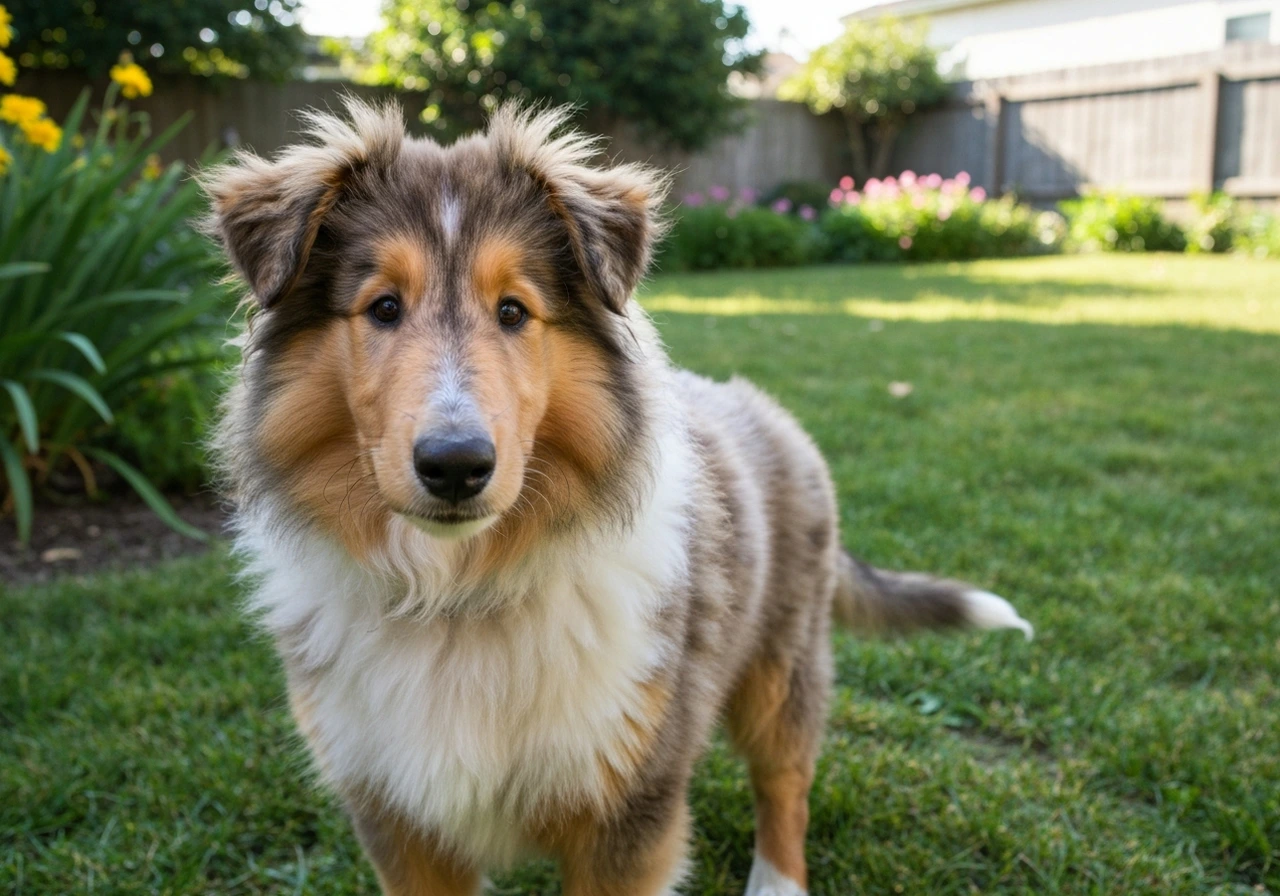
Progressive resistance can include walking up steeper hills, wading in water at belly depth, or walking through sand or tall grass. Each increases the muscular effort required without impact stress.
Physical therapy goals shift from protection to performance. We want the dog using the operated limb normally, not favoring the opposite side. Some dogs develop habitual compensation patterns that persist even after the surgical limb has healed. Professional rehabilitation therapy, similar to conservative management protocols, helps identify and correct these patterns.
TPO patients require special attention to pelvic mechanics during this phase. The rotated acetabular segment has healed in its new position, but the muscular attachments are still adapting. Exercises that promote symmetrical gluteal development help optimize long-term function.
THR patients should show near-normal gait by month three. If persistent lameness continues, return to your surgeon for evaluation. Mechanical issues like leg length discrepancy or residual muscle weakness may need additional intervention.
Four Months and Beyond: The New Normal
Most surgical patients reach functional recovery by four months, though complete tissue maturation continues for a full year. Low-impact activities can resume fully. High-impact activities like competitive agility or protection work require individual assessment based on the specific procedure and the dog's response.
FHO dogs may show subtle asymmetry in gait that persists indefinitely. This is acceptable if the dog is comfortable and functional. The pseudoarthrosis provides reliable mobility but does not replicate normal ball-and-socket mechanics. Most owners report their FHO dogs live normally aside from slight gait changes that only experienced observers notice.
THR dogs often achieve the most complete return to normal function. The prosthetic joint closely mimics natural hip mechanics. Dogs who were severely limited before surgery frequently return to activity levels their owners had given up hoping for. Watching a previously crippled Shepherd run freely after successful THR is one of the genuine joys of orthopedic surgery.
Long-term considerations: Maintain lean body condition throughout life. Annual orthopedic examinations help catch any developing problems early. For THR patients, periodic radiographs every few years monitor implant position and surrounding bone quality. Report any return of lameness promptly.
When Things Go Wrong
Complications happen despite everyone doing everything right. The most common post-operative problems include:
- Surgical site infection: Usually presents as increasing swelling, discharge, or fever starting several days post-surgery. Caught early, most infections respond to antibiotics. Deep infections involving implants may require additional surgery.
- THR luxation: The prosthetic head dislocates from the cup. This presents as sudden severe lameness, often with the leg held in an abnormal position. Immediate veterinary attention required. Some luxations can be reduced under sedation; others require surgical revision.
- Implant loosening: Usually a later complication, presenting as gradually worsening lameness weeks to months after initial recovery. Radiographs show progressive bone changes around the implant. May require revision surgery.
- Seroma formation: Fluid accumulation at the surgical site. Usually resolves with rest and warm compressing. Large seromas may need drainage.
- Persistent pain: Some dogs do not achieve the pain relief expected from surgery. This requires systematic evaluation to identify causes, which may include referred pain from the spine, contralateral hip problems, or incomplete resolution of the surgical pathology.
The Reward
Post-operative rehabilitation is tedious. Twelve weeks of confinement challenges even the most dedicated owner. The temptation to let the dog do more because they seem fine is constant. Push back against that temptation. The months invested in proper rehabilitation pay dividends for years afterward.
I follow up with my surgical patients long-term, and the ones who completed full rehabilitation programs consistently outperform those who cut corners. They have better limb function, less compensatory strain on other joints, and more active, comfortable lives.
The first time your recovering Shepherd breaks into a run across a field, all the weeks of confinement fade into background noise. That moment makes everything worthwhile.
For dogs whose genetic background predisposes them to hip problems, successful surgical recovery allows them to live the active lives their personalities demand despite the orthopedic hand they were dealt.