When I tell owners that swimming is the single best exercise for a dysplastic dog, I often get a puzzled look. They expected me to prescribe a medication or recommend a brace. But water does something no pharmaceutical can: it removes gravity from the equation entirely. A dog swimming bears zero weight through its hips while simultaneously working the very muscles that stabilize the compromised joint. That combination is extraordinary, and nothing else replicates it.
I have referred dysplastic Shepherds to structured swimming programs for over fifteen years. The dogs who swim consistently, three to four times per week, maintain better muscle mass, better range of motion, and better overall function than matched patients relying solely on conservative management without aquatic therapy. Some of my best long-term outcomes are dogs whose owners committed fully to a swimming protocol.
Why Water Works: The Physics of Buoyancy
In water deep enough to swim, a dog's effective body weight drops to near zero. The buoyant force counteracts gravity completely, meaning the hip joint bears no compressive load during the activity. For a joint where the femoral head does not seat properly in the acetabulum, this removal of compressive force is transformative.
Meanwhile, the resistance of water requires significantly more muscular effort than moving through air. Swimming engages the gluteal muscles, quadriceps, hamstrings, and hip flexors through a full range of motion against consistent resistance. These are exactly the muscle groups that compensate for ligamentous laxity in a dysplastic hip. Stronger muscles hold the femoral head more securely, reduce subluxation during movement, and distribute forces more evenly across the joint surface.
Water temperature matters. Warm water, between 26 and 30 degrees Celsius (79 to 86 Fahrenheit), relaxes muscles, increases blood flow, and reduces pain perception. Cold water causes muscle contraction and can worsen stiffness. Rehabilitation pools maintain therapeutic temperatures. Natural water bodies vary and may be too cold for comfortable therapeutic swimming, particularly in cooler months.
Getting Started: The Introduction Phase
Not every dog takes to water naturally, and a dysplastic dog with pain associations around movement may be particularly reluctant. Forcing a fearful dog into water creates negative associations that undermine the entire program. The introduction must be gradual and positive.
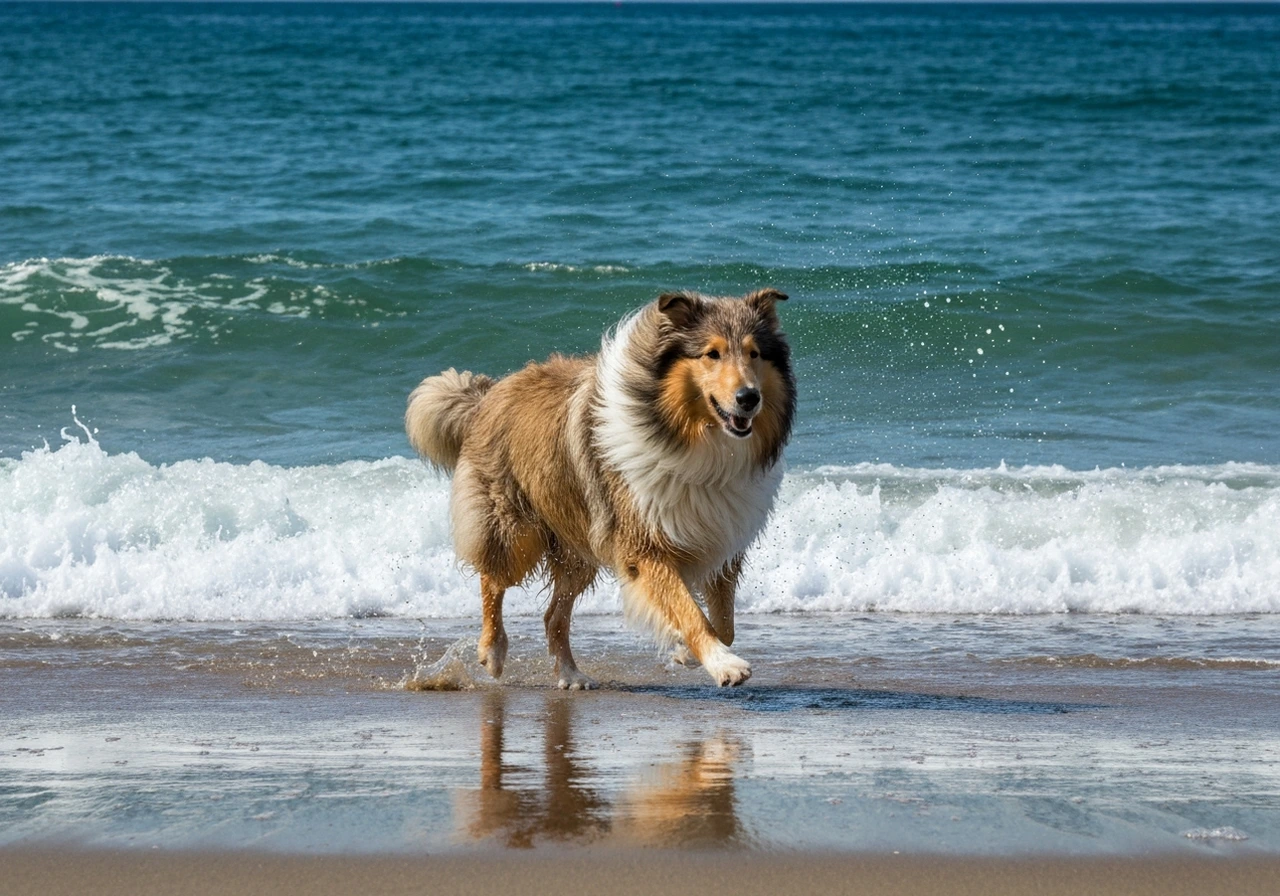
Week one: Introduce the dog to shallow water where they can stand comfortably with water at chest height. Let them explore, reward with high-value treats, and keep sessions under ten minutes. The goal is positive association with water, not exercise. If using a rehabilitation pool, the therapist controls water depth precisely to ensure comfort.
Week two: Gradually increase water depth so the dog begins to float and paddle. Support them with a hand under the belly or a flotation vest. Keep swimming intervals to 30-60 seconds with rest breaks between. Total session time remains under fifteen minutes. Watch for fatigue signals: slowing paddle rate, lowering head position, or attempting to exit.
Weeks three and four: Extend swimming intervals to two to three minutes with one-minute rest breaks. Introduce directional changes by tossing a toy or calling from different positions. Total active swimming time should reach eight to ten minutes per session. The dog should exit the water tired but not exhausted.
The Maintenance Protocol
Once the dog is comfortable and conditioned, I prescribe a maintenance protocol tailored to the severity of dysplasia and the dog's overall fitness:
Mild dysplasia: Three sessions per week, twenty to thirty minutes of active swimming per session. Include interval work: two minutes of steady swimming followed by thirty seconds of higher-intensity effort, repeated throughout the session. This builds both endurance and strength.
Moderate dysplasia: Three to four sessions per week, fifteen to twenty minutes of active swimming. Emphasis on steady-state effort rather than intervals. Include directional changes to engage lateral stabilizers. Add underwater retrieves to encourage full range of motion through the hip.
Severe dysplasia or post-surgical recovery: Daily sessions of ten to fifteen minutes during the active rehabilitation phase, tapering to three times weekly for maintenance. Work closely with a certified canine rehabilitation therapist who can monitor form and adjust the protocol based on progress. For dogs recovering from surgery, swimming protocols must coordinate with the post-operative recovery timeline established by the surgeon.
Pool Swimming Versus Natural Water
Canine rehabilitation pools offer significant advantages for therapeutic swimming. Water temperature is controlled. Depth is adjustable. The environment is free from currents, waves, and underwater hazards. A trained therapist monitors form, adjusts the session in real time, and recognizes fatigue or pain signals that owners might miss.
The underwater treadmill, a staple of rehabilitation facilities, deserves distinction from free swimming. Treadmill walking in water provides partial weight bearing rather than complete unloading. The water depth determines the percentage of body weight the dog bears, typically 40-60% at therapeutic depths. This controlled loading makes the treadmill more appropriate for early rehabilitation when full swimming may be premature. For a comprehensive look at hydrotherapy modalities and their clinical applications, Canine Joint Health's hydrotherapy guide covers the evidence base in detail.
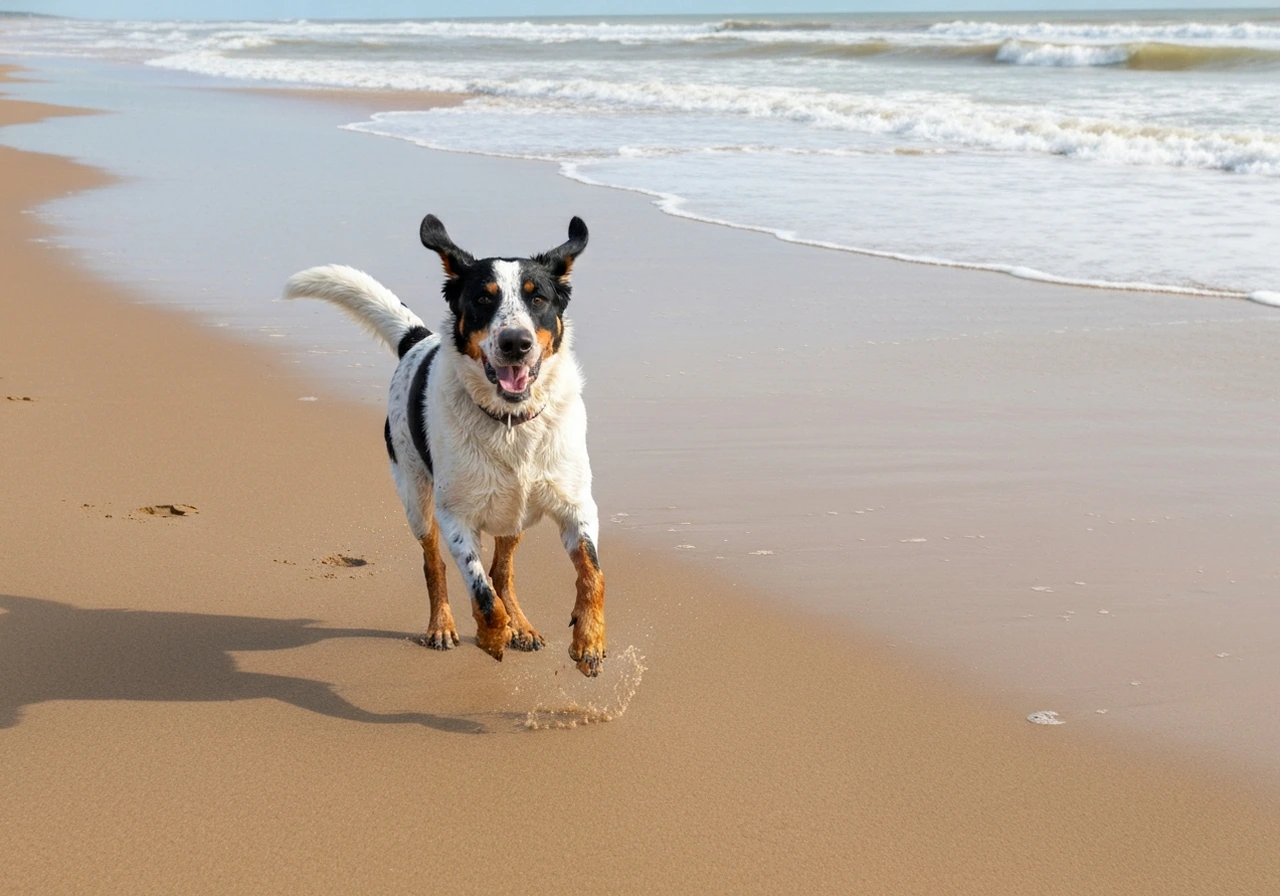
Natural water swimming, whether lakes, ponds, or calm ocean, remains a viable option for dogs who are already conditioned and comfortable. The advantages are accessibility and cost. Not everyone lives near a rehabilitation facility, and pool sessions cost $40-80 each. A dog who swims in a safe lake three times weekly at no cost will benefit more than one who visits a rehabilitation pool once monthly because of financial constraints.
Safety considerations for natural water include: confirm the dog can exit independently at the entry point, avoid strong currents, check water temperature before each session, and use a flotation vest until you are confident in the dog's swimming ability and endurance. Blue-green algae blooms present real danger in warm months. If the water looks green or scummy, stay out.
Recognizing Overexertion
Swimming feels effortless to watch, but it demands substantial energy. Dogs do not pace themselves well in water, particularly enthusiastic retrievers and Shepherds who will swim until they physically cannot continue. Overexertion causes muscle soreness, joint inflammation, and setbacks that can take days to resolve.
Watch for these signs during the session: decreasing paddle rate, head dropping lower in the water, rear legs trailing rather than actively paddling, gulping air, and attempts to exit the water or climb onto the handler. Any of these signals means the session should end immediately, not after one more lap.
Post-session monitoring is equally important. A well-calibrated session leaves the dog pleasantly tired for an hour or two, then back to normal. If the dog is stiff the following morning, limping, or reluctant to rise, the session was too long or too intense. Reduce duration by 25-30% for the next session and rebuild gradually.
The 24-hour rule is reliable: if the dog is worse 24 hours after a session than they were before it, the protocol needs adjustment. Good therapy should leave the dog feeling better by the next day, not worse.
Combining Swimming With Other Therapies
Swimming works best as part of a comprehensive management plan rather than a standalone intervention. The ideal protocol for a dysplastic dog combines aquatic therapy with controlled land-based exercise, rigorous weight management, and appropriate pain control.
On swimming days, I typically reduce or eliminate land-based exercise to prevent cumulative fatigue. On non-swimming days, controlled leash walks and targeted strengthening exercises maintain the benefits achieved in the pool. This alternating pattern provides daily activity while allowing adequate recovery.
Warm-up before swimming and cool-down afterward both matter. A five-minute gentle walk before entering the water prepares muscles and joints for activity. After the session, another five-minute walk followed by gentle range-of-motion stretching promotes recovery and prevents stiffness.
For dogs on NSAID therapy, timing medication to coincide with swimming sessions can improve comfort and performance. Giving carprofen or meloxicam one to two hours before a scheduled session allows peak blood levels during the activity. Discuss medication timing with your veterinarian to optimize the therapeutic window.
Long-Term Outcomes
The dogs who benefit most from swimming therapy are those whose owners make it a permanent part of their routine, not a temporary intervention during flare-ups. Consistent aquatic exercise over years maintains muscle mass, preserves range of motion, manages weight, and provides cardiovascular conditioning that supports overall health.
I track functional outcomes in my patients using a validated lameness scoring system. Among dysplastic dogs on comprehensive management including regular swimming, the rate of progression to requiring surgery is roughly 40% lower than in matched patients without aquatic therapy. This is observational data, not a controlled trial, but the pattern is consistent and the magnitude of effect is clinically meaningful.
The commitment is real. Three to four swimming sessions weekly for the life of the dog requires time, access, and in many cases money. But when I compare the functional years gained against the cost, swimming therapy is among the highest-value interventions available for managing hip dysplasia. No supplement comes close. Few medications match it. The water does what nothing else can.
A long-term plan for a dysplastic dog rests on a few therapies that work together rather than any single fix. Weight control comes first: keeping the dog lean reduces load on the joint at every step. Daily exercise stays, but low-impact and consistent, such as leash walks and swimming, while high-impact play is limited. Physical therapy, including range-of-motion work and controlled strengthening, helps maintain muscle support. Pain medication is used when needed, not as a substitute for the rest. For a fuller breakdown of living with a dysplastic dog, the approach is staged and reviewed over time.