The home environment can make a significant difference in daily comfort for a dog with hip dysplasia. After the veterinary appointments, the supplements, and the medications, what happens during the twenty-three hours of the day that are not spent in a clinic shapes the dog's experience of their condition more than any treatment. A dog who slips on polished hardwood multiple times daily experiences far more pain and instability than one who moves confidently on appropriate surfaces.
Environmental modification is underemphasized in hip dysplasia management. It costs less than most treatments, requires no veterinary prescription, and produces immediate, continuous benefit. Making your home work for a dysplastic dog is practical caretaking that complements everything else you are doing.
Flooring: The Constant Factor
A dysplastic dog spends most of its life walking on floors. The surface it walks on determines whether every movement is controlled and comfortable or effortful and painful. This is the highest-impact environmental modification you can make.
The problem with smooth surfaces: Hardwood, tile, laminate, and polished concrete require significantly more stabilizing muscle activity for a dysplastic dog than for a healthy one. The hip muscles that are already compromised by disuse and pain must work harder just to maintain balance. Each slip, even minor ones, creates a sudden unexpected load on the hip joint that can be painful and discouraging.
Dogs who cannot trust their footing often restrict their own movement, avoiding rooms or areas where surfaces are slippery. This self-imposed restriction looks like behavioral change but is actually pain avoidance. Providing secure footing often produces immediate improvement in willingness to move around the home.
Practical flooring solutions: Area rugs in main movement paths provide the most immediate and affordable solution. Runner rugs along hallways and between rooms allow the dog to move throughout the home without touching the slippery base surface. Choose rugs with non-slip backing or use non-slip pads underneath.
Yoga mats cut to size work excellently in specific areas like feeding stations and sleeping spots. Interlocking foam tiles, the kind sold for children's playrooms or exercise areas, can cover larger areas economically. For dogs who are particularly unstable, stick-on rubber stair treads applied to the floor along movement paths provide grip that does not shift.
Dog socks with rubberized soles are another option for dogs who need traction on smooth surfaces outside the home, such as at veterinary clinics or when visiting other environments. Many dogs adapt to them quickly.
Stairs: Assess, Modify, or Eliminate
Stairs represent one of the most demanding challenges for a dysplastic hip. Climbing stairs requires significant hip flexion and extension under load. Descending, particularly at the bottom step, involves an impact-absorbing load as the dog lands. For dogs with significant hip changes, repeated stair use throughout the day causes cumulative discomfort.
Assess whether stairs in your home are necessary for your dog's daily life. If sleeping areas, feeding stations, and outdoor access can be arranged on a single floor, eliminating stair use entirely for the dog reduces daily joint stress considerably.
When stairs cannot be eliminated, ramps are often a better alternative. A gentle ramp to an outdoor area avoids the step impact that is particularly hard on the hip. Commercial pet ramps are available in various widths and inclines. Steeper ramps require more hip extensor effort; gentle inclines of no more than twenty to twenty-five degrees are most appropriate.
If stairs are unavoidable, add non-slip treads to each step and consider limiting stair use to times when pain is better managed. The morning period of stiffness is when stairs are most challenging; arranging the dog's routine to avoid stairs until they have had a chance to warm up can reduce the worst-case impacts.
Sleeping and Resting Surfaces
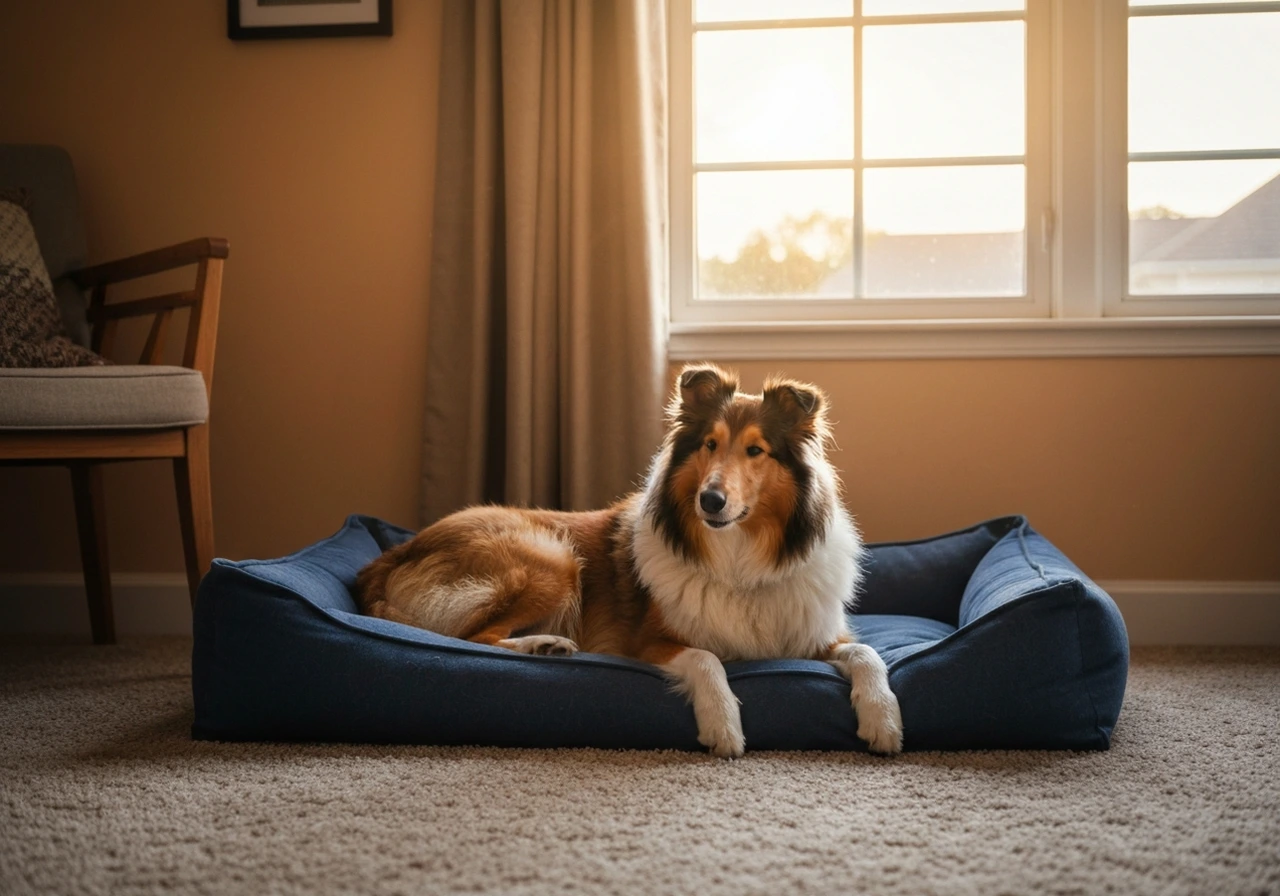
A dysplastic dog who sleeps on a hard floor is experiencing unnecessary pressure on compromised joints through the many hours of rest. Orthopedic bedding, specifically memory foam or thick supportive foam, conforms to the dog's body shape and distributes weight across a larger surface area than thin or flat beds.
The thickness of the foam matters. A three to four inch base of sufficiently dense foam provides meaningful joint relief. Consumer memory foam mattress toppers cut to appropriate size work as well as branded dog orthopedic beds at lower cost. The dog should not compress through to the floor when lying on the bed.
Bolster beds that allow the dog to rest their head and front end on a raised edge are often preferred by dogs with hip pain because they allow the dog to get up more easily using the elevated bolster as leverage. Getting up from a flat surface requires more hip extensor effort than getting up from a position where the front end is already elevated.
Provide beds in all areas where the dog spends time. A dog who has to cross cold hardwood to reach the single orthopedic bed will often choose not to make the trip. Multiple comfortable resting spots throughout the home allow the dog to rest wherever they happen to be.
Furniture Access
Jumping on and off furniture is one of the most common daily activities that places high impact loads on dysplastic hips. The landing impact when jumping down from a sofa or bed can be significant. Eliminating furniture access entirely is one option, but many dogs have an established relationship with furniture that is emotionally important to both dog and owner.
Pet steps and ramps provide furniture access without jumping. Pet steps with two or three low steps allow the dog to climb up and descend without the sudden load of a jump. Non-slip surfaces on the steps are essential. The dog may need initial encouragement and training to use them, but most dogs adapt within days when the alternative is discomfort.
Vehicle Access
Getting into and out of vehicles is another high-impact activity that many dysplastic dogs do regularly. Jumping into an SUV or truck bed from ground level requires explosive hip extension under load, and landing from any jump creates the impact that compromised joints handle poorly.
Vehicle ramps, similar to those used for furniture but rated for vehicle use and typically longer, allow the dog to walk up and down a gentle incline rather than jumping. They fold for storage when not in use. For large shepherd breeds, the incline should be gentle enough that the dog can walk up without climbing steeply.
For owners who cannot manage a ramp, assisting the dog in and out of vehicles, lifting the rear end when getting in and steadying the descent when getting out, significantly reduces the impact on the hip. The assistance feels ungainly at first but becomes routine quickly.
Temperature and Weather
Arthritic joints are sensitive to cold and damp. Many owners notice that their dysplastic dog is significantly stiffer on cold mornings or during wet weather. While we cannot control the climate, we can protect the dog from the worst of it.
Dog coats or blankets for outdoor time in cold weather reduce the exposure of already-inflamed joints to temperature extremes. Indoor temperatures should be warm enough for the dog's comfort. For dogs who sleep in cold areas, self-heating or heated orthopedic beds provide consistent warmth that reduces stiffness.
A brief warm-up period before exercise, a few minutes of slow leash walking before increasing pace, allows the joint fluid to warm and the muscles to activate before demanding more intensive movement. This simple practice reduces the risk of the sharp pain that comes from demanding full range of motion from a cold, stiff joint.
The Cumulative Effect
Each environmental modification described here produces a relatively small individual effect. A non-slip rug does not cure hip dysplasia. An orthopedic bed does not eliminate arthritic pain. But the accumulation of dozens of small reductions in daily pain and effort, across every hour of every day, produces a substantially different quality of life.
Combined with appropriate conservative management including weight control, exercise management, and pharmaceutical pain control as needed, environmental optimization gives a dysplastic shepherd the best possible daily experience. This is managing pain not just during treatment sessions but in the continuous fabric of daily life. That is where it matters most.
When I judge whether a household material is safe for an animal that chews or mouths it, I ask three questions: what is it made of, how does it fail, and what happens when a piece breaks off. Untreated wood and natural branches splinter into soft fragments; some metals bend rather than shatter; rope frays into strands that can be swallowed. Dyes and cleaning residues matter as much as the base material. The same reasoning applies across species, and I set it out for bird owners in this guide to safe parrot toy materials. For dogs, apply the identical test to chews, bedding, and crate hardware.
For a small dog with hip dysplasia, footing at home matters as much as any exercise plan. Keep paths clear of loose rugs and cables, and place non slip mats on tile or hardwood where the dog turns most often. Low sided beds and shallow food bowls reduce the crouch and twist that strain the hips. Ramps instead of stairs to the sofa or car remove repeated jumps. Nail length and paw fur also affect grip, so trim both regularly. Owners of small Nordic breeds in French kennels will recognise the same daily care needs described in this guide to German Spitz coat and care.